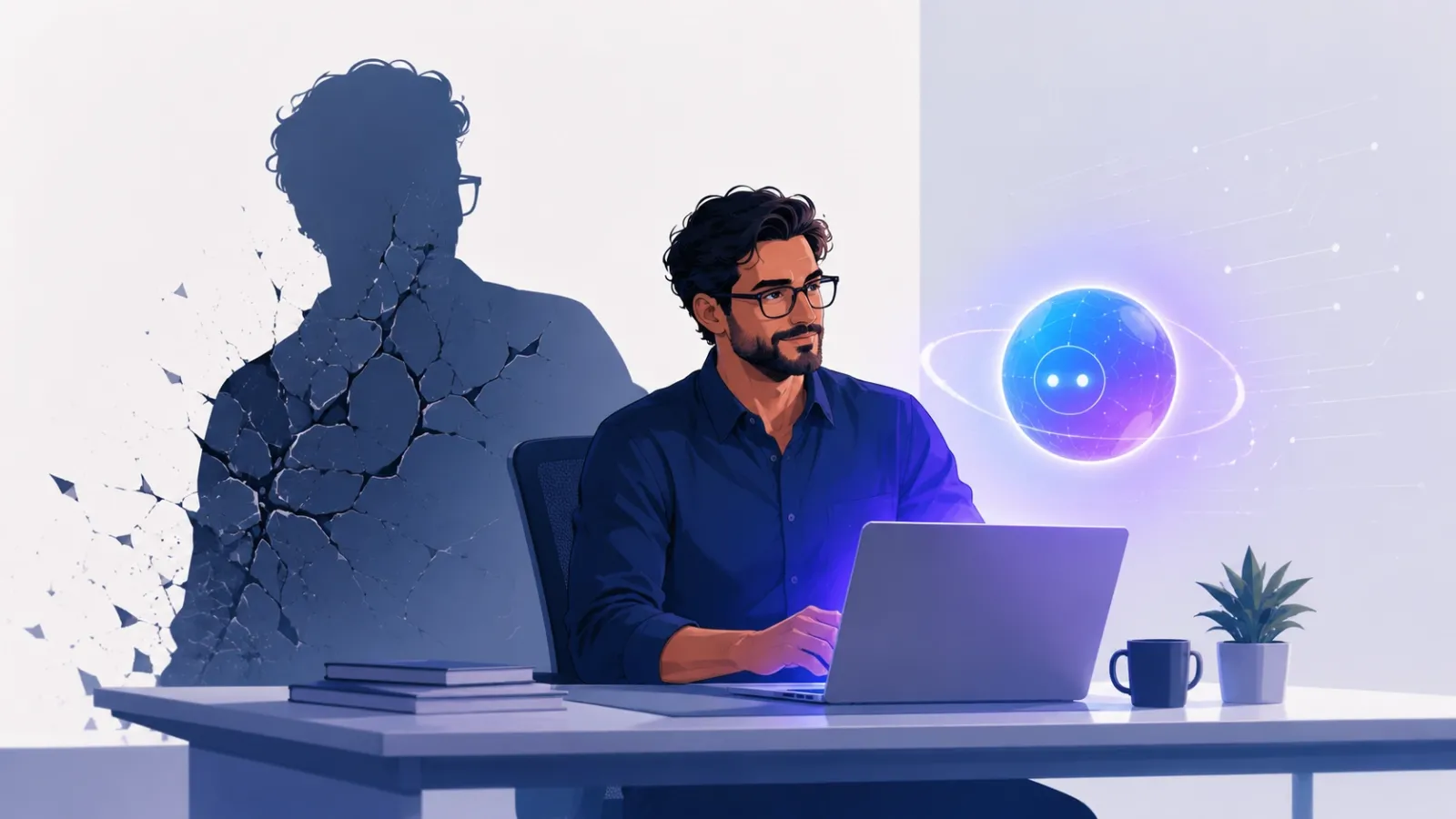
We talk a lot about what AI copilots do to junior developers — whether they're learning less, leaning too hard on suggestions, building without understanding. That conversation is worth having. But there's a quieter, less comfortable conversation we're not having: AI copilots are making senior engineers more dangerous, and the mechanism is much more subtle than anyone wants to admit.
Not dangerous in the "they'll break production" sense — though that happens too. Dangerous in the sense that experienced engineers, armed with AI tools, can now move so fast and with so much apparent confidence that the usual checks on their blind spots stop working. Speed is hiding mistakes that seniority used to catch.
Why Seniority and AI Is a Riskier Combination Than It Sounds
Here's the intuitive assumption: senior engineers know more, so they'll use AI tools better. They'll catch the bad suggestions, reject the hallucinated APIs, and steer the model toward sound architecture. That assumption is partially true — and that's exactly what makes it dangerous.
Senior engineers are better at catching the obvious mistakes. They are often worse at catching the mistakes that live inside their own existing assumptions. Every experienced engineer has a set of patterns they trust deeply, shortcuts they've validated over years, and architectural instincts they no longer question. AI copilots don't challenge those instincts. They accelerate them.
When a senior engineer types a prompt or starts a function, the AI completes it in the direction the engineer was already heading. It's a mirror that reflects and amplifies your existing approach — not an independent reviewer that pushes back. If your instinct is right, the AI helps you ship faster. If your instinct has a flaw baked in, the AI helps you ship that flaw faster, at larger scale, with more confidence.
The Speed Problem Nobody Is Measuring
Before AI copilots, a senior engineer writing a complex service from scratch would hit natural friction points — moments of slowdown where they'd reconsider an approach, look something up, or simply pause. Those pauses were not wasted time. They were the moments where second-guessing happened, where a subtly wrong direction got corrected before it became a subtly wrong codebase.
AI copilots compress or eliminate that friction. A senior engineer who once spent three hours carefully building out an abstraction now has a working scaffold in forty minutes. That feels like a pure win. But what got skipped in those two hours and twenty minutes?
- The moment they would have noticed the abstraction doesn't generalize cleanly
- The pause where they'd have reconsidered the data model before it was too late
- The natural review point where a colleague might have asked a clarifying question
- The slowdown that would have prompted them to check whether this pattern already exists in the codebase
Speed is not neutral. In knowledge work, friction has a function. We removed a lot of it without asking what it was doing.
The Steel-Man: Senior Engineers Still Catch More Than Anyone
To be fair — and I want to be fair here — senior engineers using AI copilots are still catching far more errors than junior engineers using the same tools. Their pattern recognition is real. Their ability to read generated code critically and spot something off is genuine and hard-won.
There's also a reasonable argument that AI tools democratize senior-level output in a healthy way: they let experienced engineers prototype ideas quickly, explore solution spaces they wouldn't have had time to explore before, and produce better documentation and test coverage by lowering the activation energy for those tasks.
And practically speaking, the alternative isn't "senior engineers without AI tools." The tools exist, adoption is happening regardless, and engineers who refuse them entirely will eventually be outpaced on teams that use them well. The answer is not to reject the tools.
But Here's What We're Missing
The risk isn't that senior engineers use AI copilots. The risk is that organizational trust in senior engineers hasn't been recalibrated to account for the new failure modes those tools introduce.
When a senior engineer ships something, there is an implicit trust that goes with their name on it. Teams review their PRs with less scrutiny. Architects assume their structural decisions were considered carefully. Junior developers defer to their judgment without probing. That trust was built in an environment where seniority meant both experience and the friction-based deliberation that experience produced.
Now the deliberation is partially outsourced to a model that doesn't know your codebase, doesn't know your team's constraints, and has no stake in your system's long-term health. But the trust signal hasn't changed. The senior engineer's name still carries the same weight. The scrutiny is the same — which is to say, low.
That gap between perceived reliability and actual process is where the real danger lives. I've seen it show up as over-engineered services that nobody questioned because a respected senior built them fast and confidently. I've seen security assumptions baked into AI-assisted code that nobody reviewed carefully because the author had fifteen years of experience. The speed and fluency that AI provides can look, from the outside, indistinguishable from careful, deliberate work.
What Actually Needs to Change
The fix isn't slowing senior engineers down or banning AI tools. It's updating how we think about review, ownership, and deliberation at the senior level in an AI-assisted world.
Concretely, that means a few things:
- PR review culture needs to apply equally regardless of author seniority. A senior engineer's AI-assisted PR deserves the same scrutiny as anyone else's — maybe more, because the surface area is larger.
- Architecture decisions need to be documented even when they feel obvious. If an experienced engineer used AI to scaffold a system quickly, the reasoning behind structural choices should still be explicit — not assumed.
- Senior engineers need to deliberately reintroduce friction. That means stepping away from the AI output and stress-testing their own assumptions, not just reviewing what the model generated.
- Teams should normalize questioning senior engineers' AI-assisted work without it being culturally loaded. "Walk me through your reasoning here" should be a standard question, not an implicit challenge to authority.
Where I Land
AI copilots are genuinely useful tools. I use them. I'm not arguing for some Luddite rejection of the technology. But the narrative that experienced engineers are naturally immune to AI-related risk is wrong — and believing it is its own kind of risk.
The most dangerous engineer in an AI-assisted team isn't the junior who blindly accepts suggestions. It's the senior who moves with confidence and speed, whose judgment everyone trusts implicitly, and who is no longer being slowed down enough to catch their own mistakes. That engineer can ship a flawed foundation faster than any code review process is equipped to catch.
We built trust in senior engineers for a world where experience came with built-in deliberation. That world changed. Our review culture needs to catch up.